
It’s here. The 2026 program is live, and we can’t wait to unlock the city with you on Saturday 18 and Sunday 19 July.
This is one of the most ambitious programs in Brisbane Open House history, with 93 buildings and spaces opening their doors across Greater Brisbane. More than 30 are new this year, including a record 16 private homes.
The program spans every era of Brisbane: It runs from the convict-built Spring Hill Windmill Tower, the oldest surviving building in Queensland, to the new towers rewriting the skyline. Alongside the open buildings, a full calendar of lead-up events runs through June and July: talks, walks, workshops and tours, from a live bronze pour at the UAP foundry to a a 30-metre descent into a Cross River Rail station.
Most buildings are free to visit with no booking required. Some, including the private homes, are pre-booked tours only. Tickets will be available to book (go LIVE) from midday on Wednesday 24 June – see individual building listings for more details.


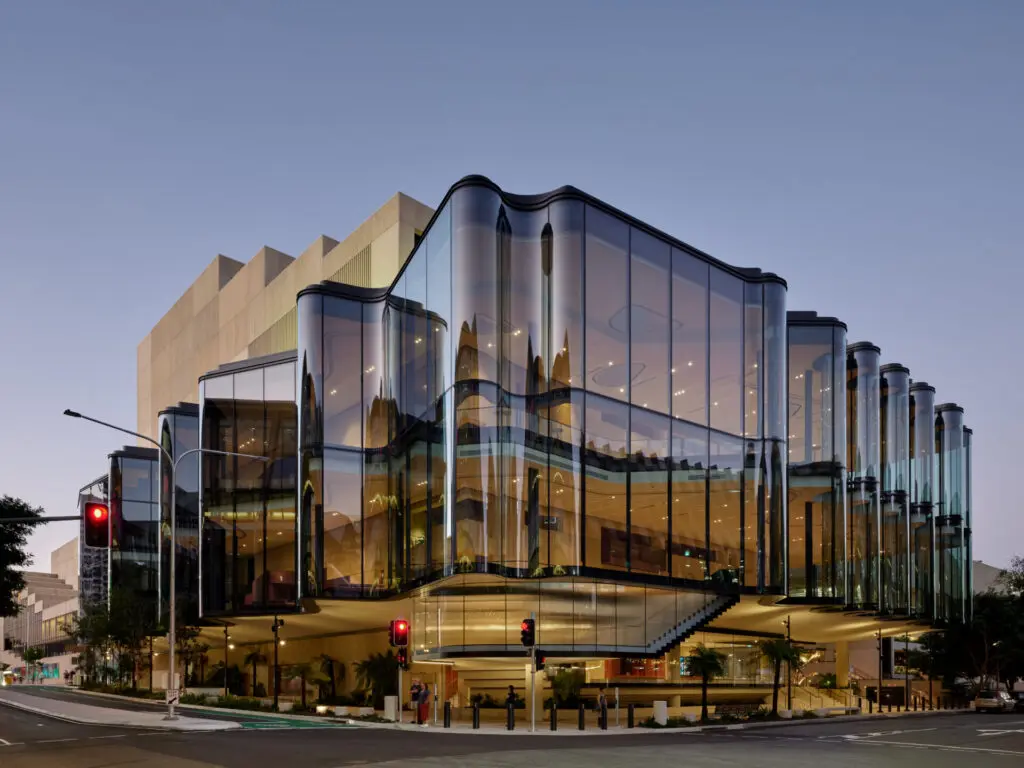
Glasshouse Theatre. Image: Christopher Frederick Jones.
New in 2026
More than 30 buildings open for the first time, and the skyline leads the way: three new towers join the program, with 205 North Quay, 360 Queen Street and 443 Queen Street all reshaping how the city meets the river. In South Brisbane, the 13-storey Trellis by ARIA reworks the Queenslander for apartment living, with deep balconies and almost 7,000 plants threaded through its facade, while next door Marlowe offers a look behind the scenes of one of Fish Lane’s most anticipated restaurants, in a restored 1938 building.
Several of the city’s most interesting studios open their own doors. Blaklash is a First Nations owned design studio working across public art and placemaking, always starting with Country; Five Mile Radius opens its workshop of prototypes, salvaged timber and experiments in progress; and The Little Building Co shows Brisbane in miniature, with its finely detailed architectural model kits. There are new cultural spaces too: the Brisbane Portrait Gallery in Fish Lane, telling the city’s story through its people, and the Queensland Communications Museum, tracing how Brisbane stayed in touch before the internet.
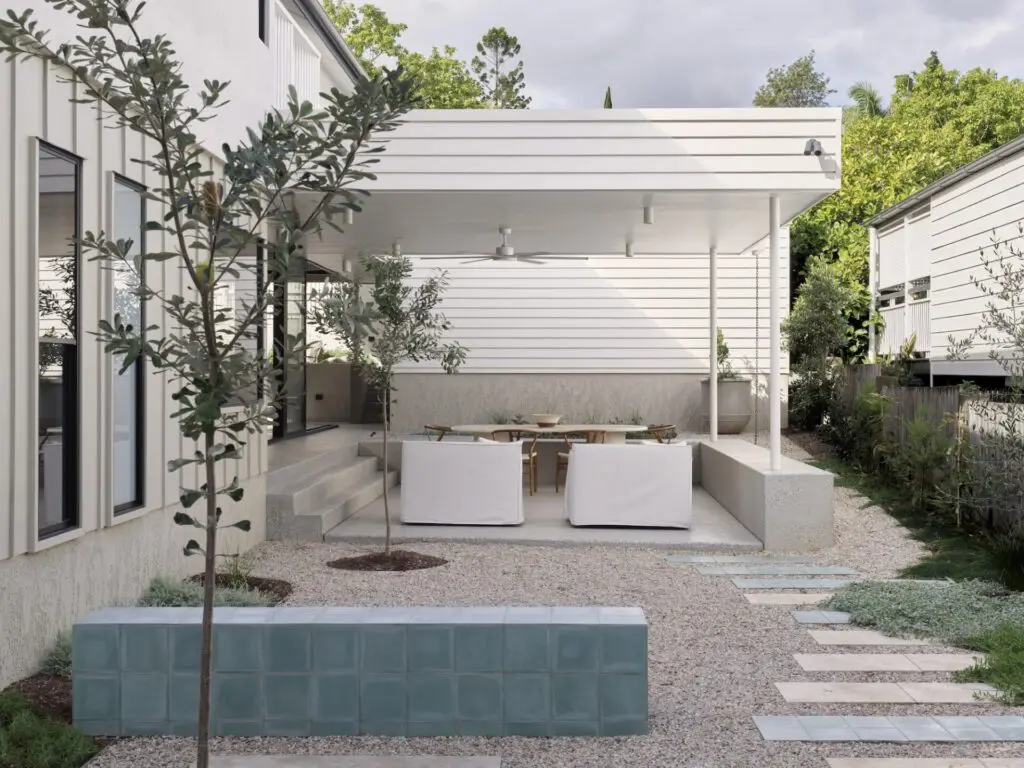
Same Same But Different, Maytree Studios. Image Toby Scott
Residential Houses
Many of this year’s homes are reinventions. Salisbury Seam House carefully reworks a 1910 workers’ cottage in Woolloongabba; Toohey Forest House slips a new pavilion behind a tropical courtyard; Harriet House interlocks a playful new tower with a modest West End cottage; and York is reimagined for subtropical living. At Cornerstone and Bloom, character homes buried under earlier renovations are opened back up to the garden, while the Wavell Heights Garden Pavilion and the Toowong Renovation share the same logic: open the house to the breeze and let the climate do the work air-conditioning usually does.
The homes are designed for how families and neighbourhoods live. Middle House is a granny flat built not for a granny but for a young family between both sets of grandparents; Yeronga House turns its street edge into a courtyard with a built-in seat for passers-by. Others turn on a single move: the salvaged materials and green roof of Living Room; the way Same Same But Different and Balmoral Hillside House step down their slopes to the garden; the inverted roof at First House that funnels rainwater into ponds. Two reach back to Brisbane’s modernist moment: the Eisenmenger House, white brick and glass in the spirit of California’s Case Study Houses, and Torbreck, the 1961 Highgate Hill tower that first brought apartment living to the city.
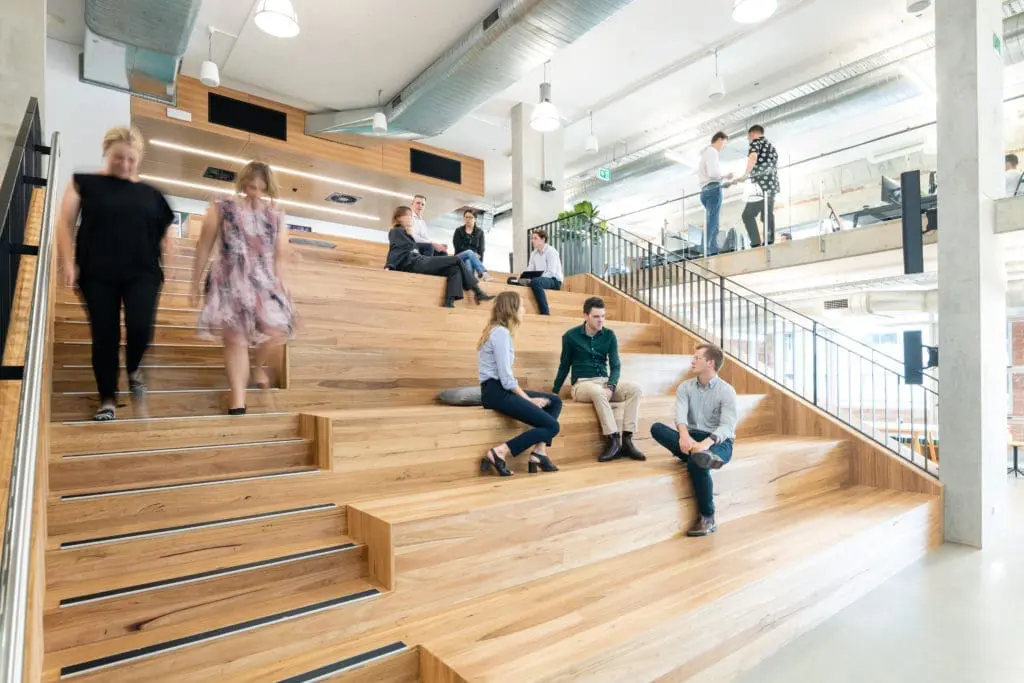
Populous Architects, Brisbane, Australia
Designers of the City
Open House is also a chance to step inside the practices that design the city, as a number of studios open their doors. Populous keeps its Asia-Pacific headquarters here, where local teams have designed venues for fifteen Olympic and Paralympic Games and much of the stadium city you know, from Suncorp to the Queensland Tennis Centre. Bates Smart, founded in 1853, and Architectus, new this year and among the country’s largest, both open their Brisbane studios, while BVN opens The Annex, the fig-tree treehouse it designed for itself on Creek Street. At the smaller end, OH Architecture opens an office that is itself a case study, slotted into a once-unused commercial yard, and Loucas Zahos Architects shows its award-winning residential work and runs Ask an Architect sessions on Saturday.
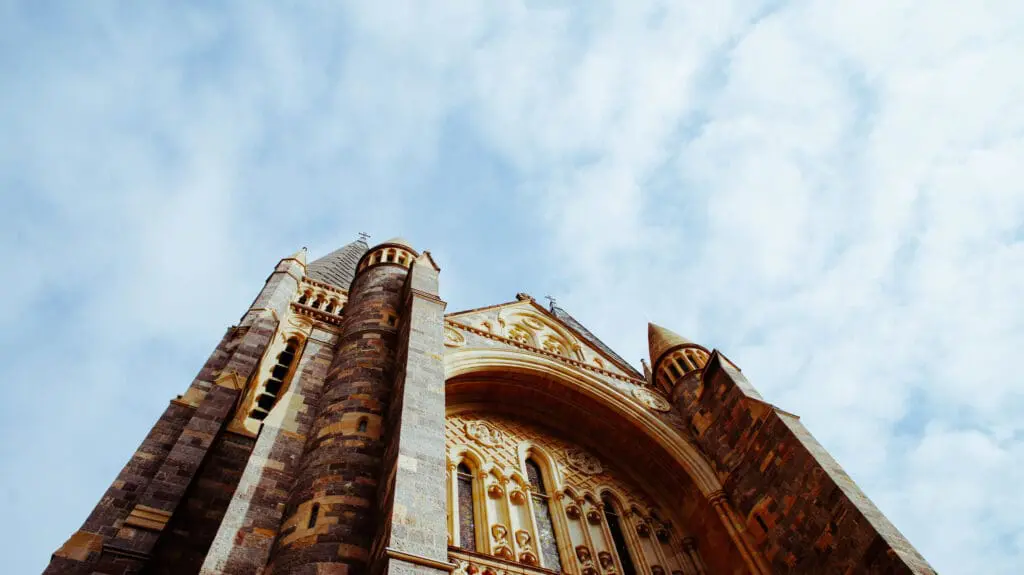
St John’s Cathedral
Places of Worship
Few buildings reward looking up like a place of worship. St John’s Cathedral is the only fully completed Gothic Revival cathedral in Australia, recently recognised in the 2026 Queensland Heritage Awards for its restored Welsh slate roof. A short walk away, St Stephen’s Chapel is the oldest surviving church in Brisbane, a small stone building of 1850 beside the neo-Gothic Cathedral of St Stephen. On Wickham Terrace, All Saints is the city’s oldest Anglican church, its 1869 interior crowned by a hammer-beam roof, while across the river at Kangaroo Point, St Mary’s holds the oldest pipe organ in the state.
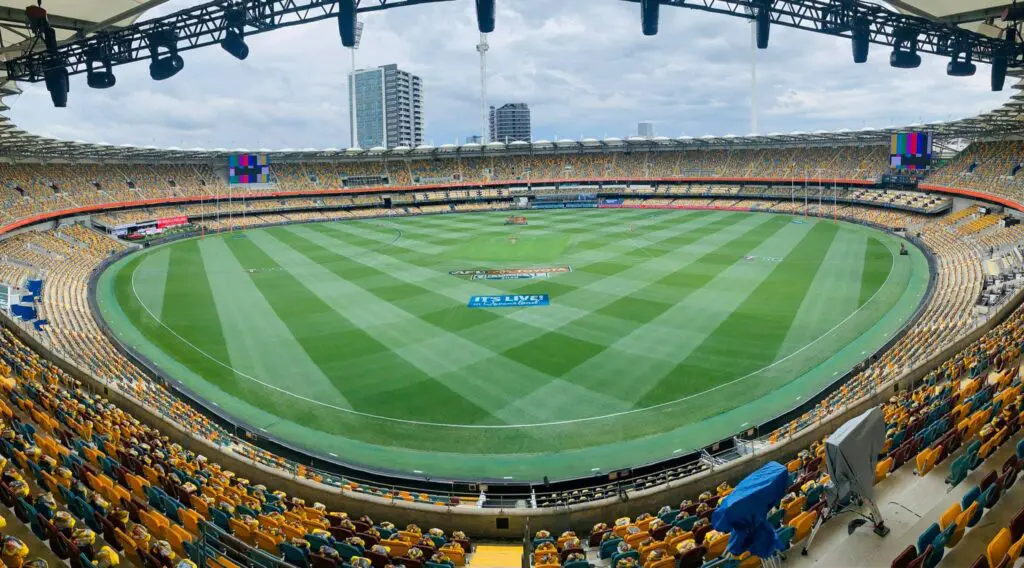
The Gabba
Sporting Brisbane
With 2032 on the horizon, sport is rebuilding the city. Tour The Gabba for a rare behind-the-scenes look before its redevelopment, then head to Herston, where the National Rugby Training Centre at Ballymore, a Blight Rayner design with a cantilevered grandstand roof, will host hockey at the Games. Brisbane has always been a city of swimmers: the Spring Hill Baths have kept it cool since the 1880s as Queensland’s oldest public pool, and on Gregory Terrace the Centenary Pool is the glamorous counterpoint, James Birrell’s 1959 modernist landmark with its floating kiosk, once judged one of the ten best buildings in the country.
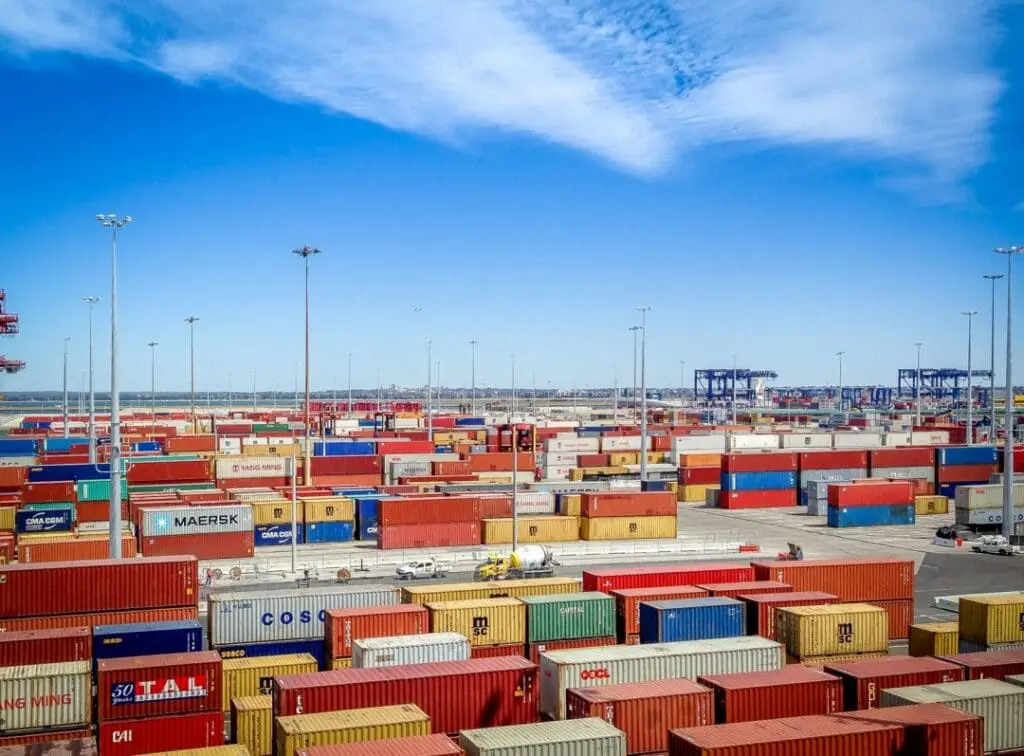
Patrick Terminals
Keeping Brisbane Moving
Every year the Port of Brisbane and Patrick Terminals open their gates for a morning of exploration and sausage sizzles. Patrick runs the first automated container terminal in Australia, moving its containers with home-grown driverless straddle carriers, a working terminal that looks more like science fiction than the waterfront. The ships do not dock alone: the Svitzer tug base is home to the boats that nudge them into their berths, run by a towage company at the job since 1833. Further upriver, Mount Crosby East Bank is where Brisbane’s tap water begins, drawn from the river since 1892 and still moving up to 500 million litres a day, with tours all weekend.
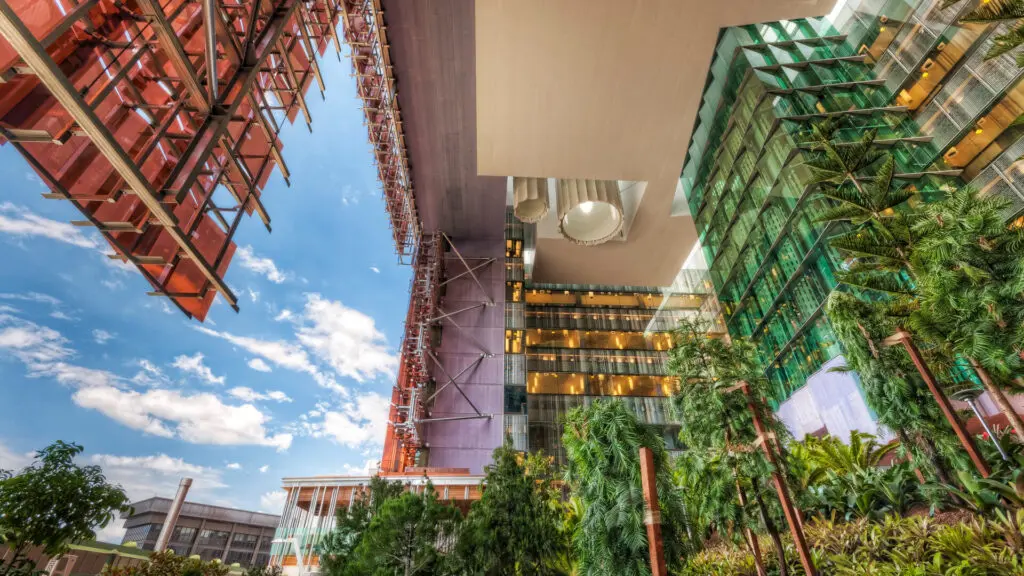
Translational Research Institute
The Scientific City
Brisbane is a research city, and three of the institutes behind its health and medical research open their doors. The Translational Research Institute, a partnership of UQ, QUT, Mater Research and Queensland Health, sets laboratories alongside the wards of the Princess Alexandra Hospital, with a preview of ENTRI, its clinical-grade manufacturing hub, before it opens later this year. At St Lucia, the Queensland Brain Institute opens the labs where neuroscientists work on dementia, motor neurone disease and mental health; and at Herston, QIMR Berghofer marks eight decades of research, from a wartime army hut at Victoria Park to today’s work on cancer, infection and brain health, with a hands-on lab where you can run an experiment yourself.
The St Lucia campus is also a showcase of design. A Kirk Studio tour takes in three landmarks beside a renewed lake: the Mary Mahoney Amphitheatre, named for UQ’s first female Deputy Chancellor; the UQ Soundshell, a vaulted timber diagrid wrapped in a thin copper skin; and the Advanced Engineering Building, a 2013 exemplar of sustainable design built from Australian mass-engineered timber.
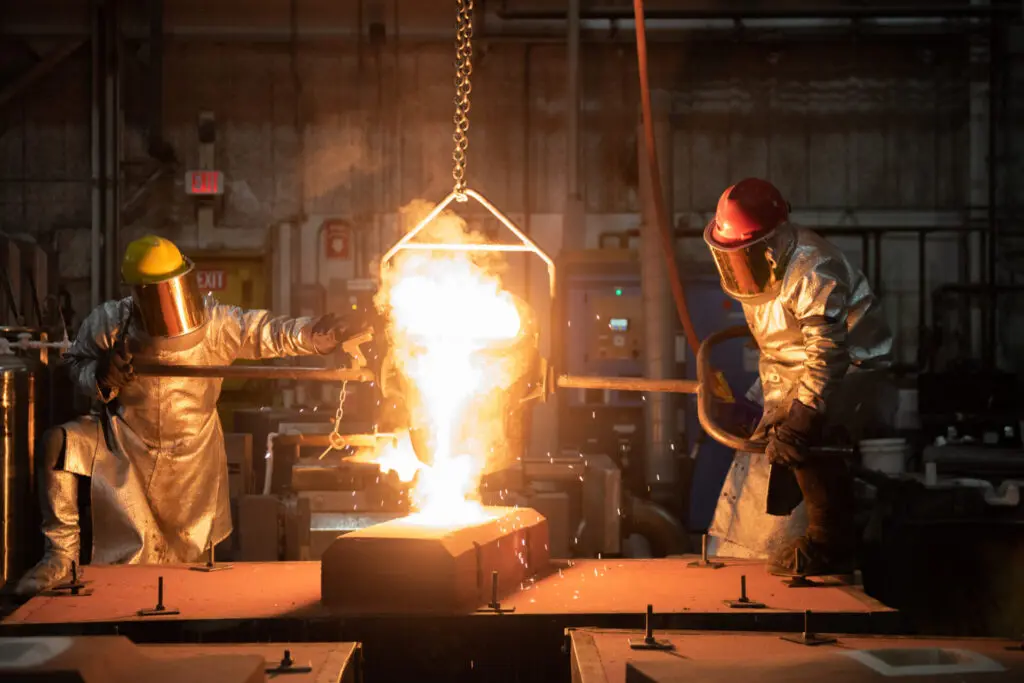
UAP Foundry
Talks, Walks, Tours and Special Events
A full program of lead-up events runs alongside the open buildings: guided walks on the Kurilpa Peninsula’s green and flood-resilient future, a free conversation marking GOMA’s 20th anniversary, and a behind-the-scenes UAP Foundry tour with a live bronze pour. For families and the curious there is a hands-on children’s workshop, Ask an Architect sessions, an urban sketching walk, and a ballot for one of the most sought-after experiences in the program: a 30-metre descent to a Cross River Rail station under construction.
Discover the Program